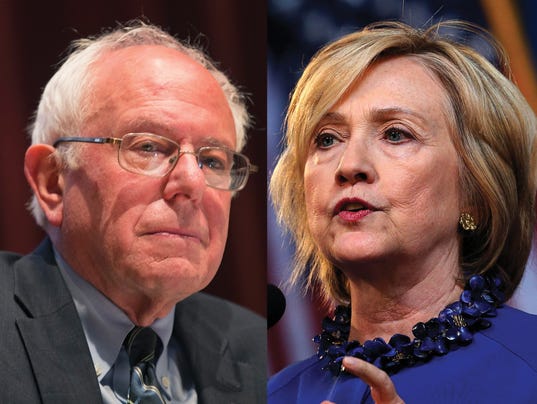
On July 11, the American Federation of Teachers(AFT) became the first major labor organization to make an endorsement in the 2016 presidential election cycle. It did not go over well with members, who took to their union's facebook page to express their disapproval. My favorite comment was from a teacher who posted:
"Of course Hillary's got a long record of linking teacher pay to performance via standardized testing and of course charter schools. One scheme is designed to kill the teacher's union and the other is aimed at killing public schools. So of COURSE the public school's teacher's union backs....Hillary.
This is why we can't have nice things."
The endorsement should not come as a suprise to anyone who is aware that Randi Weingarten sits on the board of a pro-Hillary SuperPAC, and that she has been close to Hillary for several years going back to when Clinton was still in the Senate.
What deserves a closer look from members who are asking themselves how and why this happened so early is the process by which unions often decide their political endorsements.
While there is no specific procedure spelled out in the AFT Constitution or Bylaws, Article IV, Sec. 17 gives broad authority to the Executive Council, which would technically cover this sort of endorsement. Here is a brief description of how endorsements are usually determined by unions in a way that lets them claim they "polled the members" without actually polling the members:
1. Executive council decides who they want to endorse. This is usually based on past political favors, and/or personal relationships between applicable candidates and members of the executive council.
2. The influential Locals have their internal union representatives call the leaders of the biggest chapters/shops. They are "polled" by the union representatives after they are told who the Executive Council wants to endorse. In my personal experience, nearly 100% of the member leaders I polled went along with the executive committee, as they were hesitant to go against their leadership.
This is very commonplace in today's labor movement. The reason we are hearing about this in such a big way is that unlike most labor endorsements, which are issued when a candidate has clinched a primary, this endorsement comes before a single debate, primary, or caucus has been held. This endorsement has the appearance of a brazen, unethical political favor to a candidate from a union leader who has a massive conflict of interest as a sitting member of said candidates SuperPAC. I guess we'll all know for certain if Clinton wins and taps a certain someone for a cabinet post.
In Solidarity,
Joseph Riedel

