Showing posts with label IAM. Show all posts

Tuesday, February 14, 2017

Can Labor Win in South Carolina?


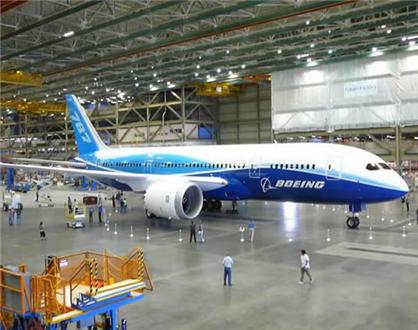
On February 15, employees at the Boeing plant in Charleston, South Carolina will vote on whether to join the Machinists Union(IAM).  If the union is successful, it would be a huge victory in the least unionized state in the country.  South Carolina is dead last by a margin that isn't even close.  The 49th state, neighboring North Carolina, has more than twice the number of unionized employees.

Winning a large scale organizing campaign in a state that Donald Trump carried by 14 points would arguably be the biggest union win in recent memory.  Unions would desperately like to win this battle, especially after the bitter UAW defeat in Chattanooga, which saw the governor insert himself to influence the vote.

If the workers at Boeing stick together in spite of an onslaught of negative, and outright intimidation by management, not only will they improve their own situation, they will provide much needed inspiration for other southern workers who seek to improve their working conditions.

In Solidarity,

Joseph

Sunday, May 1, 2016

An Open Letter to my Fellow Labor Activists

To my fellow labor activists:

I have taken leave for the past several months to sort of take stock of the current state of the labor movement, as well as my feelings about where we are now, where I think the movement is being steered by those in charge, and what I think we should be doing to rebuild the rank and file movement that defined labor at its strongest point so many years ago. This being May 1st, The international Workers' Day, it seemed appropriate to write this letter.

Last July, when I made my last post to this blog, I was covering the backlash from members that the American Federation of Teachers(AFT) was receiving due to their endorsement of Hillary Clinton over Bernie Sanders. I was not very surprised by the executive board of AFT endorsing Clinton, who has been very closely linked to Randi Weingarten, AFT's president.  I was, however, surprised that when the uproar became much louder than they had anticipated, they tried to claim that they had polled their membership, which overwhelmingly chose Clinton.  Anyone who has worked in the labor movement knows that to be a patently false statement.  Just about every major union follows the same pattern, which I explained in detail in that post, which can be read here.

Soon, the Machinists, SEIU, AFSCME, AFGE, and several other unions all endorsed Clinton long before the primary season even commenced.  There were, of course, exceptions.  The Communication Workers of America, as well as National Nurses United and the American Postal Workers Union all endorsed Sanders.  I found it striking that the unions that backed Sanders all allowed membership votes, while those backing Clinton primarily relied on the National Executive Councils of their respective organizations to make the decision.

All of this really made me step back and do some hard thinking about why, when faced with a decision between a candidate who had backed the labor movement on a fundamental level against corporate greed for 40 years, and one who backed the broader ideas of unions, but also backed large corporations and took a labor management approach, they would choose the latter.  The answer became very clear to me: This primary would highlight the ever growing chasm between the class struggle being waged by the rank and file members and labor activists, and the lobbying organizations into which the labor elite have turned these institutions.

So Where Are We Now?

When I accepted a job with SEIU in 2011, I had been a shop steward and labor activist for several years.  I had pursued a job with several labor organizations, and was excited to finally be a paid staffer with a labor union.  What I discovered was a completely different world than I had imagined, and not just within SEIU.  From my interaction with other staffers at various other unions, it was obvious that there were a ton of similarities.  As I have written about extensively on this blog, there has been a trend over the last 15 years of unions, particularly at the national and regional level, to hire recent college graduates as staffers.  While the students are typically progressive, they often do not have any experience as union members.  This has exacerbated the disconnect between rank and file members in the shop, and their leadership.  I feel we rapidly approaching a crossroads where this must be rectified, or else we face the prospect of a fractured labor community.

Where Are They Taking Us?

In my opinion, the major shift from labor movement to lobbying effort was kicked into high gear by Andy Stern.  It was never a secret that Stern desired to be a player in DC, so much so that he was willing to fracture the AFL-CIO to do it.  Change to Win was patched together largely by the cult of personality leadership of Stern and Hoffa(honorable mention to Doug McCarron).  The leadership of the large labor organizations are largely involved much more in political lobbying than they are with the day to day struggles of the rank and file.  The fact that nearly ever major union, with the exception of the Steelworkers and a few others, have their headquarters within walking distance of Capitol Hill is very telling.  I think we owe it to ourselves to ask if we want our unions to continue to be lobbying organizations that focus primarily on attempting to further our cause through using our resources to affect legislative changes, or if we are resolved to return the labor movement to its direct action roots when we didn't trust politicians to do our bidding.

What Is To Be Done?

For my part, I will always prefer direct action to lobbying.  This has a lot to do with the fact that I studied political science in college and was a member of a union(AFGE) that depended on legislative action for a lot of their collective bargaining terms.  For public sector unions, lobbying makes a lot more sense due to what I just mentioned.  However, in the private sector, I believe we need to reaffirm our commitment to the direct action roots of our labor founding fathers(and mothers).

I implore every labor activist out there to do some volunteer organizing for your local IWW branch.  I really believe that the Wobbly approach is still the best approach.  Rebuilding the IWW would go a really long way to revitalizing the labor movement at large.  If you agree with anything you read, please evaluate your feelings about the direction of our movement, and resolve to do whatever we have to do to get things back on track.  Where are the Mother Joneses and the Joe Hills of this generation?  If it isn't us, who will it be?

In Solidarity,

Joseph
Monday, September 9, 2013

AFL-CIO Proposed Resolutions

The 2013 AFL-CIO Convention is underway in Los Angeles, and I decided to peruse the proposed resolutions, as well as proposed amendments to the AFL-CIO Constitution.

Here are some of my favorites:

Resolution 5, which just passed, co-opts the IWW method of growing membership to organize the unorganized.  This would extend AFL-CIO membership to all workers, even if they are not yet working under a collective bargaining agreement.

Constitutional Amendment 1, which would add a Young Workers' Representative to the AFL-CIO Executive Board.

Then there's Constitutional Amendment 2 & 3.  Amendment 2 is the Machinists' Union(IAM) complaining about Raider Unions, which made me think, "Pot, meet the kettle."  Amendment 3 is an amendment to reaffirm that Article XX(anti-raiding) will not be applied to non-affiliated unions. Paranoid much?

Let's see what else comes up.

In Solidarity,

Joseph

Wednesday, January 23, 2013

NUHW-CNA: A Real Match Made In Heaven

Some time ago, I wrote about the proposed affiliation between the International Association of Machinists(IAM) and the National Union of HealthCare Workers(NUHW).  While that proposed partnership never came to fruition, NUHW and the California Nurses Association(CNA) recently made their affiliation public.

I always held the opinion that CNA was a much better fit for an affiliation with NUHW than the Machinists, for various reasons.  The most obvious is that CNA is a healthcare union that would help bridge the gap between organizing professional and non-professional employees.  The partnership with NUHW sort of fills the doughnut hole, if you will. Secondly, as much as IAM would have liked to assist NUHW in the upcoming Kaiser election re-runs, I don't believe they would have brought as much to the table as CNA does.

For NUHW, this partnership brings two very big benefits:

1. By affiliating with an AFL-CIO member union, NUHW is protected by Article 20 of the AFL-CIO constitution.  Article 20 protects member organizations from being raided by other AFL-CIO affiliated unions.  While this won't help to keep SEIU from trying to raid their chapters, it is one less thing to worry about.  On a side note, I believe this clause makes the split between SEIU and the AFL-CIO almost permanent.

2. This partnership will bring much needed resources to NUHW in their ongoing struggle against SEIU.  They will certainly need CNA's organizing and financial assistance if they hope to have a chance to be victorious in the Kaiser fight.

I believe that this is a pivotal moment in the history of the American labor movement.  The Kaiser election will help to shape the direction of the labor movement for years to come.  Only time will tell which way it will go.

In Solidarity,

Joseph

Monday, March 19, 2012

Labor's New Odd Couple, Or A Match Made In Heaven?


There is the familiar old adage, politics makes strange bedfellows.  The recent announcement that the NationalUnion of Healthcare Workers (NUHW) and the International Association of Machinistsand Aerospace Workers (IAM) are discussing a possible affiliation may have some people reworking that statement to include the labor movement.   

Like many in the labor community, I have to admit I was puzzled when I first heard of this possible partnership.  Why would an independent union of healthcare workers who are locked in an epic struggle against what is arguably the most undemocratic union in modern labor history consider teaming up with a union that has no history of representing healthcare workers, and frankly, has had its own issues in the past with internal democracy?

            According to John Borsos (Vice-President of NUHW), “IAM shares NUHW’s vision to build a national healthcare union.”  The fact that IAM is not involved in healthcare is seen as something of a plus to NUHW, as Borsos believes this will afford his organization a greater level of autonomy.  Of course, all of these issues are yet to be hammered out by the two unions, and any affiliation would be subject to approval by the respective memberships. 

So why would NUHW choose IAM over another independent union, such as the United ElectricalWorkers (UE) or another healthcare union like the California Nurses Association(CNA)?  While Borsos confirmed that there were other suitors who showed interest in NUHW, he declined to confirm specific organizations who expressed interest. 

While detractors will likely speculate that the NUHW-IAM alliance is based solely on the fact that NUHW needs resources for the upcoming rerun of the Kaiser Permanente elections, it is important to point out that if there were the case, why wouldn’t NUHW just affiliate with Unite Here, who, according to the Department of Labor, gave NUHW $4.8 million in 2010?  When asked about what kind of support IAM would be giving NUHW in the upcoming elections, Borsos would only say that IAM would be offering assistance – “Both financial and otherwise.” 

While there is no question that NUHW will benefit greatly from this alliance, it should be pointed out that IAM will also benefit from its willingness to consider an affiliation with this upstart democratic union.  If they are committed to making their union more democratic, then this affiliation could be a step in the right direction.  While some may view this as the labor movement’s current version of the odd couple, skeptics should at the very least applaud the willingness of IAM to take on the purple monster, which is something that most unions have not had the intestinal fortitude to do thus far.   

(SEIU did not respond to repeated requests for comment on this story)

Friday, March 16, 2012

Book Review: Civil Wars In U.S. Labor by Steve Early

 
Ever since Florence Reese wrote the lyrics to Which Side Are You On? in 1931, that question has been posed between labor and the bosses. With his latest offering, The Civil Wars in U.S. Labor, Steve Early will have workers and activists asking themselves where they stand in the labor movement.

In Civil Wars, Early, who is a well known critic of SEIU’s lack of internal democracy, meticulously dissects the various internal issues that have plagued the organization over the last several years. At the same time he also gives a historical background to provide adequate context for the reader to understand where the problems originated. Early discusses the failure of the MAC (Member Action Center) Call Centers in a chapter that is humorously titled, Dial 1-800-My-Union? The MAC line was a running joke during my time as an SEIU Organizer with District 1199 in West Virginia, as it consisted of an answering machine and an email being sent to the organizer to fix whatever issue had been reported.

While Civil Wars gives a very detailed account of the hostile takeover of United Healthcare West that led to the formation of NUHW (National Union of Healthcare Workers), Early also points out that while this trusteeship is by far the most publicized and biggest action by SEIU, it is certainly not the first. Early explains how Andy Stern crushed dissent in other locals by forcing their members into other locals who were either already under trusteeship, or under the leadership of Stern loyalists.

Early does not end his coverage of SEIU’s woes with internal issues. In a section titled How EFCA Died for ObamaCare, Early explains how SEIU burrowed into a position of influence inside the Obama administration and effectively elbowed out other unions. This is something that has put even more stress on the already fractured relationship SEIU has with the rest of big labor.

As a former SEIU staffer, I found myself cringing as I read Civil Wars, much as many rock stars must have cringed watching Spinal Tap for the first time. I believe this book should be required reading, not only for members of SEIU, who will find Civil Wars to be a disturbing peek behind the purple curtain, but also for anyone who cares about the future of the labor movement.  I found Civil Wars to be a disturbing validation of what I experienced firsthand as an organizer with SEIU.  The chickens have finally come home to roost after twenty years of shifting from a grassroots democratic union into a top-down bureaucratic corporation that places a higher value on political influence than it does on member representation.  

Civil Wars offers a unique look inside the challenging proposition facing NUHW that is all too familiar for IWW members – surviving as an independent union.  Among the major labor organizations in the United States, only a few, namely IWW and the United Electrical Workers(UE) have survived over the long-term.  NUHW’s recent partnership with the Machinists(IAM) demonstrates just how difficult it can be.
While Early focuses on SEIU, the issues that are raised in Civil Wars are faced by members in many other unions. When unions begin to look more like the corporations they are supposed to be fighting than the militant, democratic voice for workers that they are meant to be, it is only natural that the battle lines will begin to form, as Civil Wars clearly shows.

The real question Early seems to be asking is, very simply, Which Side Are You On?

Friday, June 4, 2010

National Mediation Board Changes National Railway Act Election Rules


This is a few weeks old, but I feel that this is still important enough to post. When I was in NYC attending the AFL-CIO Organizing Institute, we did an event with an IAM Lodge that is currently organizing Delta employees, and I was struck by their commitment to the rights of their members. The National Mediation Board(NMB) has ruled to change the archaic election laws in the National Railway Act.

After the Delta/Northwest merger, Delta began a fierce union-busting campaign against the IAM. Delta has been anti-union for years, and was trying not only to keep its employees from having union representation, but also trying to strip unionized Northwest employees of their rights as well. Thanks to this ruling, the union must get 50+1% of casted votes to win the election, as opposed to the previous standard, which forced the union to get 50+1% of all votes, whether the vote was casted or not. This meant that if you were sick and could not make it to vote, your vote was a no vote, even if you had intended to vote yes. This is a HUGE decision for the Machinists Union(IAM).

You can read the press release here: